


If you have had a headache in the past year, you are not alone – the World Health Organization (WHO) says that half to three-quarters of adults across the globe have had a headache in the past year1. There are several types of headaches, and each can cause different symptoms, but most involve pain in your head and face. Fortunately, over-the-counter medications and other home remedies can alleviate most mild to moderate headache pain.
Types of Common Headaches
More than 150 types of headaches exist, but some are more common than are others2. Headaches fall into two main categories: primary and secondary. Primary headaches are not caused by another medical condition, while secondary headaches develop as the result of another condition2.
Most headaches are primary2, and the most common types of headaches include3,4,5:
- Tension headaches – As many as 2 out of 3 adults get tension headaches.
- Migraines – About 8.3 percent of Canadians experience migraines; in fact, a study found that majority of participants visited a headache specialist at least once, with an average frequency of five times a year.
What are the signs & symptoms of common headaches?
The signs and symptoms of common headaches may vary according to the type of headache you are experiencing.
Tension headache signs and symptoms
Tension headaches usually cause a mild to moderate dull, aching pain that may feel like a tight band around your head and be on both sides of your head, for example, and you may experience tenderness in your scalp, neck, and shoulder muscles3 Learn more how to spot a tension headache.
Migraine headache signs and symptoms
Migraine pain will likely occur in the front of the head on one or both sides of the temples. The sensations can be intermittent and throb, or they can also be steady6. Learn more about migraines signs and relief.
Some people experience a warning sign known as an aura, which often develops about a half hour or so before the headache starts. During an aura, you may experience blind spots, flashing lights, or wavy lines; you might also experience tingling “pins and needles” or numbness in your face, arms, or hands6.
What causes headaches?
Headache pain is usually caused by signals interacting in the brain, blood vessels and nerves – specific nerves get triggered that affect muscles and blood vessels. Those nerves send pain signals to the train, causing you to experience a headache2.
Knowing how the activity in our body and brain can cause headache pain, people often ask themselves, “why do I get headaches?”. There are several triggers that can lead to headaches. For example, poor sleep or stress can cause the muscles in your head and neck to tighten, which may result in a tension headache3. Even certain chemicals and hormones in the body, such as serotonin and estrogen, can narrow blood vessels to cause migraines7.
Headaches may develop as the result of triggers, such as2,3,7:
- Anxiety and stress.
- Alcohol use.
- Glare from a computer screen, sunlight, or overhead lights.
- Poor eating and sleeping patterns – Sudden changes in eating and sleeping patterns can trigger headaches.
- Too much physical activity/Exertion.
- Poor posture can cause tension in your upper back, neck, and shoulders that triggers headaches.
- Hormones – Dropping levels of the hormone estrogen just before your period begins.
- Food sensitivities, such as to caffeine, chocolate, or cheese and more.
Why do I keep getting headaches?
You may have recurring headaches if you cannot control the triggers of primary headaches, or you have not resolved the underlying cause of secondary headaches.
Headache relief & prevention tips
The good news is that you can relieve most types of headache pain once you know your triggers and you can learn how to get rid of a headache fast. However, the first thing you should do is rest!
Treatment and relief options for headaches often include2,8:
- Stress management (if that is a trigger) and techniques to help you cope with situation that may cause emotional stress. The techniques could include breathing exercises or muscle relaxation.
- Over-the-counter pain relievers for mild to moderate headache and migraine pain, such as TYLENOL®.
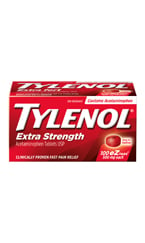
- TYLENOL® Extra Strength Caplets start to relieve mild to moderate headache pain in 15-20 minutes*!. TYLENOL® contains acetaminophen, which is a pain reliver and fever reducer.
- Extra Strength TYLENOL® Rapid Release gelcaps Its unique laser drilled holes help release medicine fast!
- To be sure any TYLENOL® product is right for you, always read and follow the label. IMPORTANT: Take only ONE medicine at a time containing acetaminophen
- Home remedies such as applying a cold, moist cloth or an ice pack on your forehead. Heat packs could also work.
Additionally, you can also work to help prevent headaches in the future. First, identify potential triggers to avoid 8. Keep a headache journal and note what happened in the hours preceding it. Jot down what you had to eat, your activities, whether there were loud noises, and the amount of exercise you had before your headache started8.
Next, make lifestyle changes to address headache causes and triggers. Relaxation techniques and breathing exercises can help you soothe everyday stress anxiety before they cause tension headaches, for example. Get enough – but not too much – sleep and exercise. Take frequent breaks from your computer, sit up straight when at your desk, and get out of the habit of cradling your phone between your shoulder and ear8.
When to see a doctor
Sometimes a headache is not just harmless headache – it may be a sign that something is wrong.
See a doctor if you have a headache and:2,9
- The pain lasts for more than five days.
- The fever lasts for more than three days.
The existing pain or fever worsen or if new symptoms appear. To learn what to do when you have a headache, or to help you determine the cause of your headache, consult with your doctor.
*With a 2 caplet dose.
Sources:
- https://www.who.int/news-room/fact-sheets/detail/headache-disorders
- https://my.clevelandclinic.org/health/diseases/9639-headaches
- https://my.clevelandclinic.org/health/diseases/8257-tension-type-headaches
- https://www.tylenol.ca/symptoms/adult/headaches/how-to-spot-a-tension-headache
- https://www.cambridge.org/core/journals/canadian-journal-of-neurological-sciences/article/burden-of-illness-of-migraine-in-canada-new-insights-on-humanistic-and-economic-cost/ADB6BC09A69E7366E2CFCB2E80A8ABF9
- https://www.mayoclinic.org/diseases-conditions/migraine-with-aura/symptoms-causes/syc-20352072
- https://www.hopkinsmedicine.org/health/conditions-and-diseases/headache/how-a-migraine-happens
- https://www.healthlinkbc.ca/health-topics/headaches-managing-headache
- https://www.mayoclinic.org/symptoms/headache/basics/when-to-see-doctor/sym-20050800