


Tips for Relieving Infant & Baby Cough, Cold & Flu Symptoms
Tips for Relieving Infant & Baby Cough, Cold & Flu Symptoms

When your infant or baby shows signs of having a cold or flu, you’ll try anything to give them relief. Most children’s cough and cold medicines are not recommended for children under six years of age. However, there are a number of ways you can help keep your child comfortable and soothe their symptoms.
With some careful attention (mixed with a little bit of TLC), you can quickly and efficiently help your little one feel like their normal self. Here are some preventative measures you can take as a parent:
Take precautions before bedtime
Most kids get restless when they’re sick, but children with a cold or flu should have lots of bed rest to help their bodies fight the virus1. Here are four preventative measures you can take to help your child relax before bedtime:
- Keep your child hydrated2. Feverish children can get considerably dehydrated from sweating.
- Children with the flu are often not very hungry, but their bodies still need nourishment to fight the illness.3 Make sure your child consumes easy-to-digest meals in the evenings. Some good options are rice, crackers, toast, soup, and bananas.
- Use a humidifier to help with nasal congestion.4
- To help relieve fever in infants 0-2 years, use Infants’ TYLENOL® Fever and Sore Throat Pain Concentrated Drops or Infant’s TYLENOL® Drops. Always read and follow the labels to ensure the product is right for your child.
Ways to Help Prevent Colds and Flus
Colds and flus are brought on by viruses. The best way to avoid these viruses is to prevent your family from coming into contact with them in the first place, and from spreading them to each other.
It’s important that your entire family follow these simple rules:
- Avoid contact with people who are sick. If you work outside the home or if your children go to school or daycare, this may be difficult to do; however, you can ask people to not visit your home if they have a cold or flu.
- Follow this proper hand-washing technique. This is the simplest and most effective way to prevent infecting yourself and others.
- Use warm water and soap.
- Briskly rub your hands together for 15 to 20 seconds.
- Wash in between your fingers, around your nails and the back of your hands.
- To prevent germs and viruses from spreading or entering your system (or someone else’s), wash up after you shake hands with someone who is sick, take out the garbage, pet animals, change a diaper or use the bathroom. Also wash your hands after you blow your nose or sneeze or cough into your hands. Wash your hands before you eat or prepare a meal or snack, treat a wound or put in contact lenses.
- Avoid touching your eyes, nose or mouth. Teach your children that this is a common way for a virus to enter your body from your hands.
- Cover your mouth when sneezing or coughing. If you don’t have a tissue within reach, sneeze or cough into your folded elbow rather than on your hands.
- When someone in your household is sick:
- Use separate towels
- Use separate drinking cups and utensils
- Ensure dishes are washed well with soap in hot water.
1betterhealth.vic.gov.au/bhcv2/bhcarticles.nsf/pages/flu_influenza?open
2betterhealth.vic.gov.au/bhcv2/bhcarticles.nsf/pages/flu_influenza?open
3newkidscenter.com/What-to-Feed-Sick-Toddler.html
4aboutkidshealth.ca/En/HealthAZ/ConditionsandDiseases/Symptoms/Pages/Nasal-Congestion-in-Babies.aspx

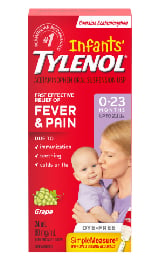
Infants’ TYLENOL® Drops
Trusted by doctors and parents for over 50 years to relieve fever and pain.