


Oh, the drool, the gumming on just about everything. We know it well. Teething is one of those special (but sometimes tricky to navigate) milestones that is likely to mystify most new parents. Luckily, there are some easy ways to help soothe your little one throughout the process.
When you can expect your baby’s first tooth
Most babies usually get their first tooth between 4 and 7 months, but every baby is different. A few may not even get their first tooth until after their first birthday, but there’s no need to worry about timing. Most toddlers have a full set of 20 teeth by the time they’re three years old.
Some signs your child may be teething
He or she may be:
- Acting a little cranky
- Crying
- Drooling
- Wanting to chew on hard things
- Having puffy, sore gums around lumps that feel hard to the touch
- Experiencing a slight fever
A high fever (over 101°F) and diarrhea are not caused by teething. If your baby has either one, call your family doctor or pediatrician.
Some tips for soothing sore gums
• Pressure works
Gently rub your baby’s gums with a clean finger or offer a teething ring/pacifier made of firm rubber.
• Keep things cool
Chill a teething ring, pacifier or wet washcloth – but don’t fully freeze it. Anything too hard can damage your child’s delicate gums. You can also give your child cool, soft foods like applesauce or yogurt if she is eating solids.
• What to avoid
Stay away from liquid-filled teething rings as they may burst, and never tie a teething ring around your baby’s neck for easy access.
Keep your baby comfortable
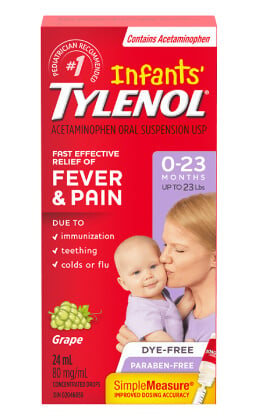
Try a pain medicine – such as Infants’ TYLENOL®†– to ease teething pain if your baby is uncomfortable.
† To be sure this product is right for your child, always read and follow the labelled directions prior to use.